On October 7, 2026, ICANN disclosed the applicants and proposed strings in its new generic top-level domain round. Its initial count is 1,615 applications, including 333 identified as brand applications. For trademark owners, the immediate job is to inspect proposed domain endings and preserve evidence of any conflict before the formal input period opens. These are applications, not approved or usable domains. ICANN published the figures and timetable; TechRadar and The Register independently covered the reveal.
What ICANN actually revealed
A top-level domain is the part after the final dot, such as “.com”. An applicant in this round is seeking to operate an entire new extension. That differs from buying a name under an existing extension. ICANN's Application Publication and Statistics database identifies proposed strings, applicants and public application details. The October 7 figures are a snapshot: ICANN says the final number and types will be confirmed after eligible applicants have a chance to choose replacement strings.
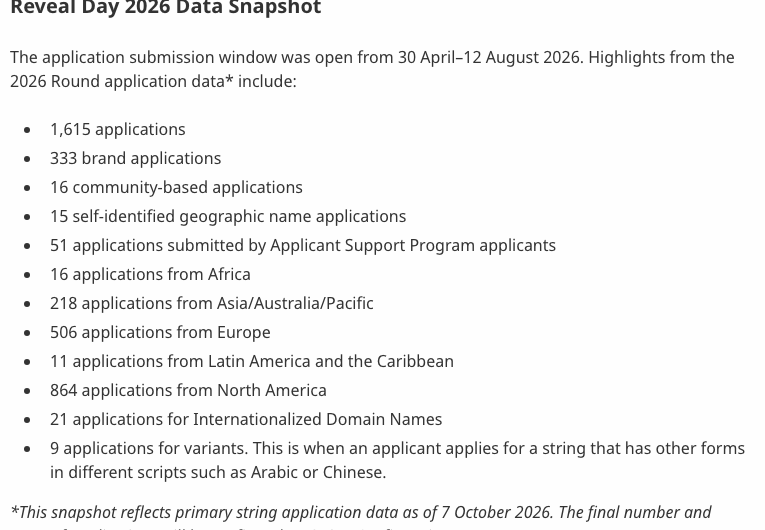
Official ICANN Reveal Day data snapshot, cropped for readability. Application counts do not mean approval or delegation.
The geographic spread matters to companies with cross-border customers. ICANN reported 864 applications from North America, 506 from Europe, 218 from Asia, Australia and the Pacific, 16 from Africa, and 11 from Latin America and the Caribbean. It also counted 21 internationalized domain-name applications. A business should therefore review the list with its actual trading languages and markets in mind, rather than search only an English version of its name.
A brand application does not grant a trademark monopoly
The 333 “brand applications” are a classification in ICANN's snapshot, not 333 trademark wins. Applicants still face string review, evaluation, possible objections and contention processes. Some proposed terms may draw competing applications. A registration for a word in one country likewise does not automatically decide who may operate an identical string worldwide. Rights, uses, the proposed registry model and the program rules all need separate review. Calling a string a “brand” also says nothing by itself about whether it will be delegated.
That distinction is essential for founders. Securing trademarks in the United States, United Kingdom, European Union, Japan or China remains a jurisdiction-by-jurisdiction project. Monitoring a proposed top-level domain is a related online-identity task. Neither replaces the other. A company that sells into several markets should compare its word marks, local-script names, house brands and product names against the published strings, then decide which matches merit counsel review.
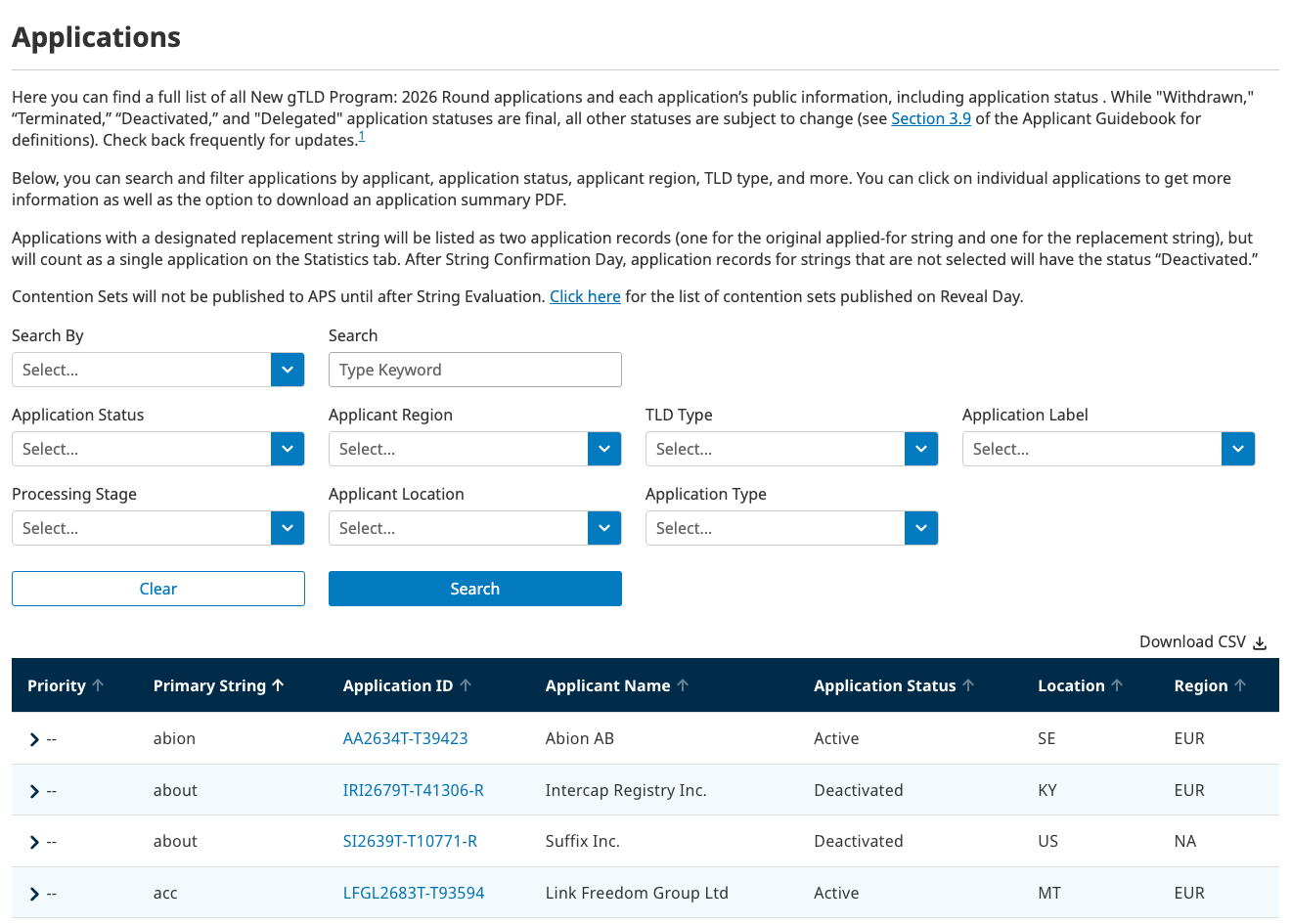
Official ICANN application database, captured October 13, 2026. Statuses and proposed strings can change; consult the live record for each application.
The dates trademark teams should calendar
ICANN's replacement period runs from October 8 through October 21, 2026. An eligible applicant may switch to an alternate string submitted with its application. ICANN plans to publish the confirmed list on November 17, 2026. Its stated community input and objections period runs from November 17 through March 16, 2027. These milestones mean a search done today is useful for triage but should be repeated after the confirmed list appears. The specific rules and deadlines for a formal objection should be checked against the then-current ICANN and dispute-provider notices.
WIPO explains the Legal Rights Objection route for trademark owners concerned that an applied-for extension would infringe existing rights. ICANN's 2026 Applicant Guidebook sets out standing and grounds. A resemblance is a reason to investigate; it is not an automatic objection or automatic success. Legal Rights Objections concern the proposed top-level string before delegation. They are different from later disputes over individual domain names registered beneath an extension.
What about names registered under new extensions?
The Trademark Clearinghouse framework addresses a second layer: qualifying marks can support sunrise registration opportunities and trademark-claims notices when new registries launch. That system does not itself award a brand the extension or block every later domain registration. Brand owners should budget separately for monitoring proposed extensions, considering any objection, and protecting selected names when a registry eventually opens. The timing of a future launch is not established by Reveal Day.
There is a useful comparison in our earlier analysis of a domain-name dispute: evidence about a particular domain and its use becomes important once a name exists. The ICANN reveal is earlier in the chain. It gives rights holders a chance to examine the proposed extension itself, the applicant and the registry plan before any public registration under it.
A five-step review for business owners
- Inventory the words you protect. Include registered and pending marks, key product names, local-script forms, and the countries and goods or services covered. Confirm owners and status in official registers.
- Search ICANN's live application list. Record the proposed string, applicant, public application link, date searched, and any similar or translated terms. Screenshot relevant records because the list may change.
- Assess business impact. Ask whether the proposed extension could affect customer trust, impersonation risk, licensing, channel partners or planned market entry. Rank concrete risks before spending on a challenge.
- Recheck on November 17. Compare the confirmed strings and contention sets with the October snapshot, then review official comment and objection procedures with qualified counsel if a conflict remains.
- Plan later registrations and monitoring. Consider Trademark Clearinghouse eligibility, likely sunrise needs, phishing controls and who in the company owns domain alerts and evidence preservation.
ICANN's reveal is an early warning, not a verdict on any company's rights. Sologo's Global IP Service Network helps founders coordinate trademark protection across target markets; start by mapping your marks, territories and online names with Sologo. If the brand system itself needs consolidation before expansion, the brand kit tools can organize approved assets for internal review. This is general information, not legal advice for a particular application or objection.
Cover: official ICANN image from its October 7 announcement. Screenshots: official ICANN announcement and application database, captured October 13, 2026.