A federal judge on October 2, 2026 refused to dismiss Workers United's Pennsylvania case asking for a declaration that its Starbucks Workers United name and logo do not infringe Starbucks' rights. The order lets the union's claims proceed to discovery. It does not decide whether the union logo infringes, is diluted, or is protected use. For brand owners, the practical issue is what a temporary agreement and an unfinished enforcement dispute actually settle. Read the court's memorandum.
The court addressed whether there is a live dispute
Workers United sought declarations of trademark non-infringement, trademark non-dilution and copyright non-infringement. Starbucks argued that a 2024 memorandum of understanding had resolved the dispute, leaving the court without a current controversy to decide. Judge Michael Baylson rejected the motion at the pleading stage. The court treated the union's allegations as true for that purpose and found the dispute sufficiently concrete to continue. Bloomberg Law independently reported the October 2 ruling.
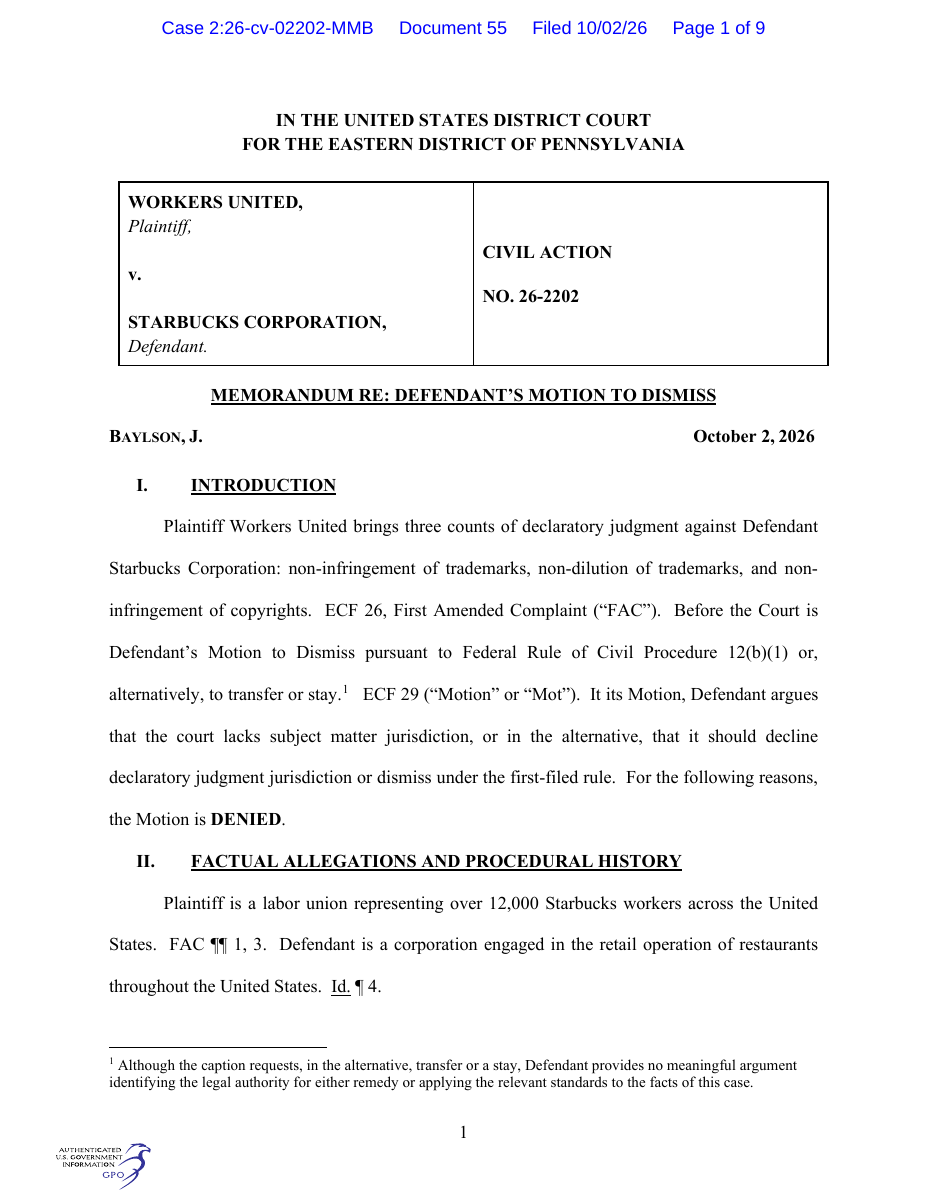
First page of the federal court memorandum, hosted by the US Government Publishing Office. The ruling denies a dismissal motion; it is not a final trademark judgment.
The memorandum recounts a 2023 cease-and-desist letter, the parties' earlier lawsuits and a later agreement to keep talking. The prior cases were dismissed without prejudice. The court found that the memorandum set interim limits while negotiations continued; on the allegations before it, it was not a final settlement, release or promise not to sue. Starbucks' later Iowa action made the threat of enforcement more concrete. These details explain the jurisdiction ruling. They do not establish that the union's logo is lawful or unlawful.
Why the name and raised-fist logo remain contested
The union has used “Starbucks Workers United” for organizing and shows a circular design with a raised fist holding a takeaway cup. Its official website displays the mark. Starbucks has asserted rights in its name and visual identity and challenged the union's use. An ordinary reader can see why the relationship between a business and the people organizing its workforce matters to the public meaning of the logo. The legal question will require the parties to address the particular uses and evidence, not simply whether two circles look alike.
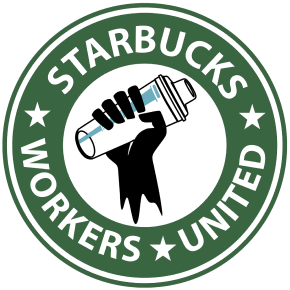
Logo displayed by Starbucks Workers United on its official website. Shown for identification; the October 2026 order did not rule on infringement.
The USPTO's infringement overview identifies ownership, priority and likely confusion about source or sponsorship as central issues. In this setting, the parties may dispute whether viewers think the union is the company, speaks for it or is simply identifying whose workers it organizes. Context, accompanying words, channels, audience and evidence of actual reactions may all matter. Copyright and labor-law questions can also affect the overall dispute, but the October 2 memorandum did not resolve those merits.
What temporary brand-use deals need to say
The general business lesson is unusually concrete. If two parties pause litigation to negotiate, the document should say what uses may continue during the pause, for how long, under whose control and with what notice if talks fail. It should distinguish a temporary tolerance from a license, release, final settlement or covenant not to sue. The court's account of this memorandum shows why ambiguous expectations can leave both sides back in court even after old cases are dismissed.
Brand management is not only a legal filing exercise. Marketing, HR, franchise, licensing and community teams often encounter third parties who must refer to the company by name. A single rule demanding removal of every reference can create conflict; an informal exception can create uncertainty. A documented approval path and clear usage standards help the business react consistently while preserving the facts needed if litigation follows.
A verifiable checklist for business leaders
- Identify each asset. Inventory the word mark, logos, color treatments and copyright material separately. Record registrations and actual uses rather than treating them as one bundle.
- Preserve the real context. Save dated screenshots of the third-party use, surrounding labels, linked pages and customer reactions. Avoid judging a cropped emblem in isolation.
- Review interim agreements. Ask whether a document actually releases claims, grants permission, or only controls conduct while talks proceed. Calendar end dates and notice obligations.
- Use proportionate escalation. Put the business objective, likely audience and reputational effects beside legal options. A negotiated labeling change may sometimes answer a confusion concern, but its value depends on the facts.
- Track the current docket. Check both the Pennsylvania declaratory case and the Iowa infringement action before claiming a final outcome. Obtain advice from counsel in the relevant jurisdiction for a live dispute.
The October order is a reminder to write down exactly what a pause in a trademark dispute means. Sologo's Global IP Service Network can help businesses organize brand portfolios and coordinate protection across markets; start with Sologo and a dated inventory of the marks, territories and permissions that need review. Its brand kit tools can keep approved visual assets together. This article is general information, not legal advice on the Starbucks litigation or any individual matter.
Cover photograph: Starbucks Workers United official website; an earlier organizing scene, not the October 2026 court hearing.